Inside Solar & Storage UK: Tackling Scalability and Turnkey Challenges
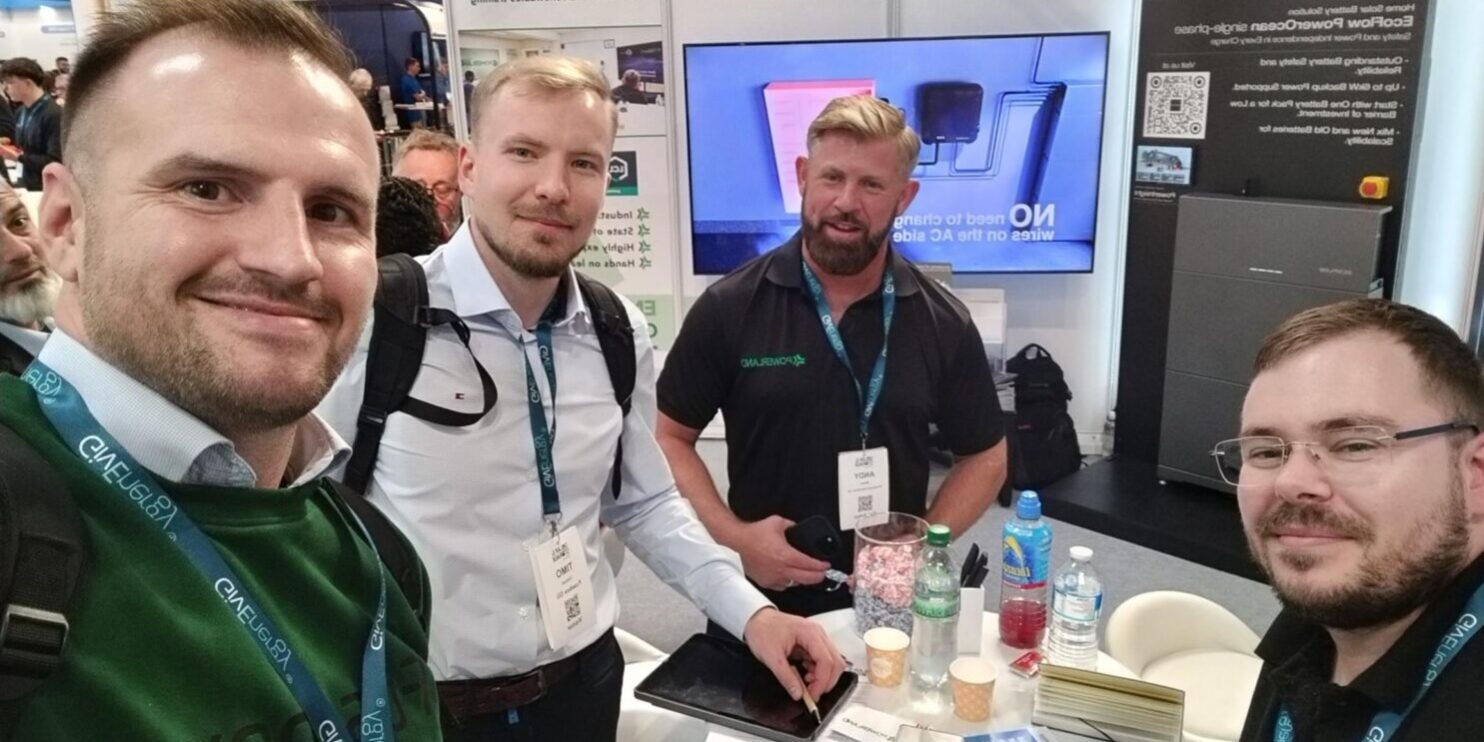
In October 2024, Timo Tolmusk and Raido Seppam from Fusebox attended the Solar & Storage UK trade show. The event was packed with industry players — installers, original equipment manufacturers (OEMs), and engineering, procurement, and construction (EPC) firms — all discussing the future of solar PV and battery storage. Timo and Raido had some great conversations, learning about where the market was headed and what companies were struggling with. But more importantly, they explored how Fusebox can help businesses get ahead of the curve.
The growing gap in the market
One thing became clear from the event: there’s a significant gap between what asset owners need and what suppliers currently offer. When investing in new PV or battery energy storage systems (BESS), owners are seeking more than just hardware. They want turnkey solutions: a comprehensive package that handles everything, from installation to advanced software that integrates the system’s production, storage, and consumption while connecting it to the energy market. This holistic approach is key to managing complex hybrid setups efficiently.
Here’s where the opportunity lies. Most installers and OEMs are stuck in their niche, either focused on providing hardware or installation, but rarely both, and certainly not the whole package. Many are struggling to offer that comprehensive solution, and without it, they struggle to stand out from competitors. If you’re offering a similar setup to your competitor, there’s a good chance the client will pick the cheaper option. Timo and Raido saw this as a key pain point in the market.
Scalability is tough
Another big challenge is scalability. Setting up a single site for PV and BESS is relatively straightforward, but when you’re dealing with multiple sites, things get tricky. Scaling across 10 or more sites requires robust management systems, which many providers aren’t prepared for. This is where Fusebox’s expertise comes in, offering a solution that simplifies managing assets across various locations.
The UK’s focus at the time: maximise self-consumption
In the UK, most PV systems are used for self-consumption, meaning they’re designed to meet the energy needs of the owner rather than sell power to the grid. Batteries play a key role here, letting owners store and use solar power more flexibly. However, as Timo and Raido noted, the market was missing out on some bigger opportunities.
In other markets, PV and BESS owners have access to tools that help generate extra revenue through energy arbitrage: buying and selling energy when it’s most profitable. But the UK’s tariff-based pricing at the time, which locked in rates, made it financially less attractive to sell power back to the grid. Many companies were missing out on this potential revenue stream.
A clear example of this is how Fusebox manages a battery system that charges and discharges using two markets: the mFRR and day-ahead markets. By leveraging both markets, we can take advantage of larger price differences, maximising profits through more flexible and strategic energy trading.
What changed: dynamic pricing arrived through suppliers, not a single rollout
At the time, Ofgem was expected to roll out dynamic pricing more broadly by 2025. What actually happened was more incremental: dynamic, wholesale-linked tariffs grew through supplier-led products rather than a single centralised change. Octopus Agile, which prices electricity every 30 minutes off the GB Day-Ahead market, became the UK’s largest dynamic tariff, reporting more than 250,000 customers by early 2026 and recording 137 hours of negative pricing across 2025 alone.
That shift opened the door for PV and BESS owners on compatible tariffs to participate in energy arbitrage and more dynamic market activity — much like Timo and Raido anticipated. The open question at the time was whether the UK market was ready to adapt. Installers, OEMs, and aggregators who built the automation and flexibility to act on half-hourly price signals were the ones positioned to benefit; those still running static, manually-scheduled systems were not.
Fusebox: a decade of experience
For over 10 years, Fusebox has been at the forefront of energy management, offering advanced energy management system (EMS) software that allows asset owners to fully control and optimise their energy consumption, production, and storage. Our EMS provides the tools to manage and adjust assets locally, ensuring maximum efficiency.
For those with larger assets or more complex needs, such as power utilities with diverse portfolios, our virtual power plant (VPP) solution is the next step. The VPP connects assets to ancillary markets and enables centralised management across multiple sites, making it ideal for balancing market participation and broader energy management.
As dynamic pricing and more flexible energy models continue to spread across the UK, Fusebox is ready to help companies adapt and stay competitive. Talk to Fusebox →