Article · 1 December 2026
Trust: 100% or 0%. A digital twin of your Lead
A Lead who trusts the task fully and the pull request not at all becomes the team's biggest blocker, and AI multiplies the pull requests. His review questions, written down and run before he reads.
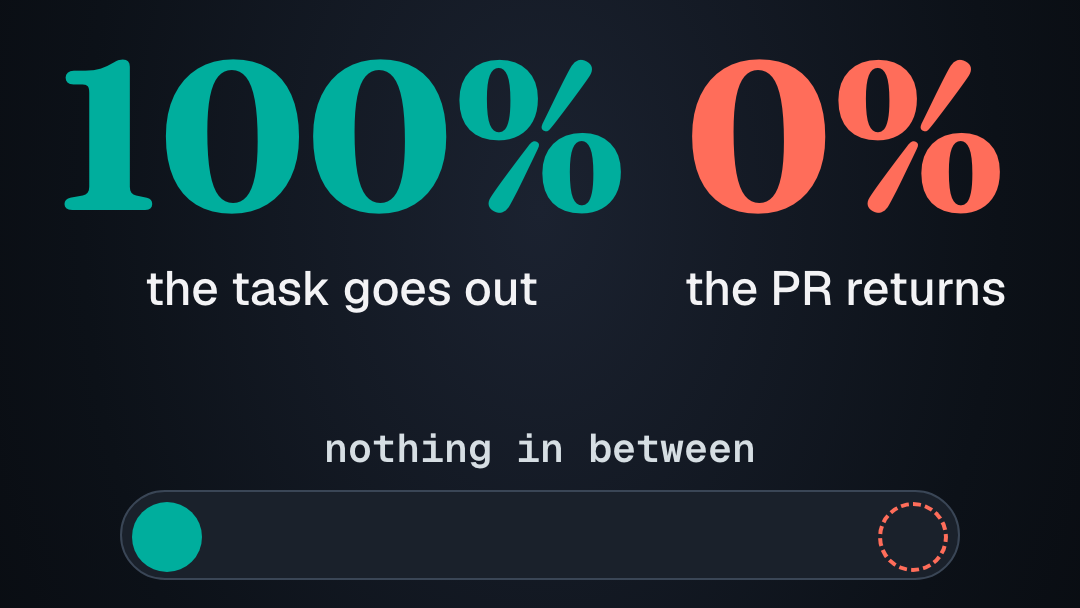
Trust at 100% when the task goes out, at 0% when the pull request comes back, and nothing in between. I worked with a Lead like that. Not a bad one: he was the person fixing other people's bugs in the middle of the night, and that is where his 0% came from. This is what that costs a team, why AI coding makes it worse, and what would have helped him.
100% at the kick-off
One quick call, and the task was yours. From then on he took for granted that you would:
- do the extra research the task needed;
- map the user stories, the corner cases and everything off the happy path;
- ask for help when stuck, not too often, and not only him;
- notice when you were stuck or slow, and change course;
- decide the way he would have, because “it's common sense, right?”;
- check your own code, make it clean, and care about the UI and the UX.
None of it was written down. It was common sense, to him.
0% at the review, and the 3 ways it ended
- The PR came back, with tons of rework. It was no longer a task: it was code going to production that he would be supporting at night if it broke. So it got a hard review: comments in Jira, comments on GitHub, changes requested, and almost nothing let through to production. That was the good ending.
- No PR, and nothing to show. Nobody checked in after the kick-off, not the Lead and not the developer. Demo day came, and the developer said: “I have nothing to show.”
- No PR, and the wrong thing to show. Someone got stuck and was afraid to ask, because asking felt like looking bad. So they built what they understood, and it was not the task, not even ready for a pull request. They demoed it to a call full of cameras switched off.
Why AI makes it worse
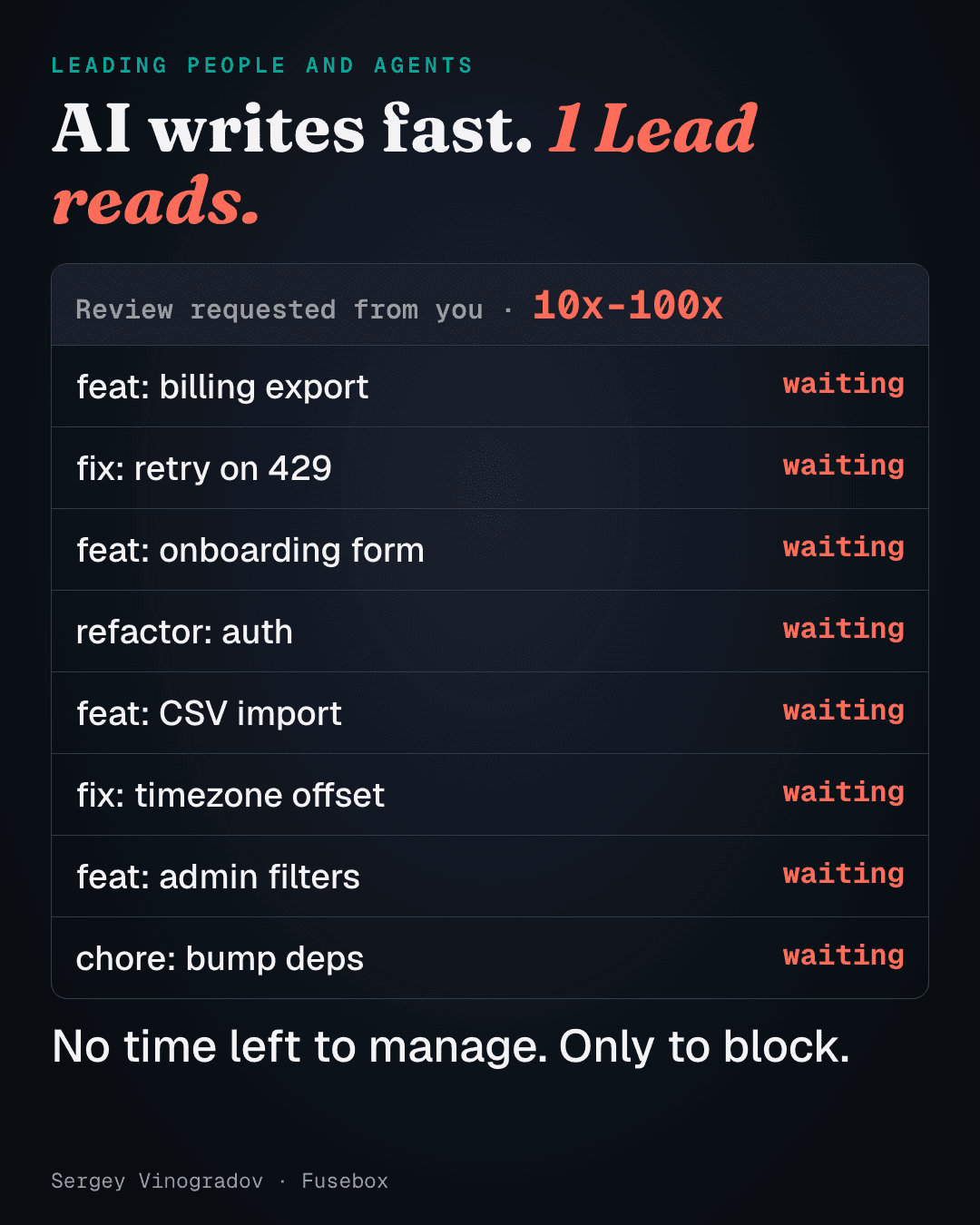
This was there before AI. With AI writing the code, the pull requests reaching that one reviewer go up, in my estimate 10x to 100x. The review that was a bottleneck becomes the only thing he does, and the managing it needed, the check-ins, the questions, the course corrections, gets no time at all. It is the same wall I wrote about in my post on a team's “100% AI mandate”, and it is what stalls companies halfway through the switch to AI.
The blocker is the Lead, and he has no time to fix it
The biggest blocker in that team was the Lead himself. Fixing the way the team worked would have removed him as the blocker, and it took time he never had: his time went on reviews. Too busy to take the wheel.
A digital twin of the Lead
What would have helped him is a reviewer that asks his questions before he has to:
- Write down the questions he asks in every review. The corner cases, the decisions he would have made differently, the night-time support, the UI. What was “common sense” becomes a file.
- Run them on every pull request before it reaches the Lead. An agent, or a review round of agents, asks every question on every pull request.
- The developer fixes what the twin finds, then the pull request goes to the Lead. The Lead reviews work that has already answered his usual questions, so his review is about what is new.
- Let each of his reviews tune the questions. A comment he still had to write is a question the twin did not ask yet; it goes into the file.
- Hand over more as the twin proves right. As the questions get better from his feedback, the twin may one day review alone, with no human review at all.
We work this way ourselves: our rules live in files every agent reads at the start of a session, and every piece of work goes through review rounds before a person reads it. How those rounds work: make your AI agent disagree first.
In short
- Trust that is 100% at the start and 0% at the end leaves nothing for the middle, where the work happens.
- AI multiplies the pull requests, not the reviewers, so the Lead becomes the blocker.
- Written-down review questions, run before he reads, give him back the time to manage.
We build it with you, and you keep it
For custom development, we set this up for the company: your domain knowledge, your existing sources and what has to be built go in; the twins, the rules and the code come out, and we build the solution with them, fast. Then it is handed over: the code and the system are yours, to run and support without us, or with us if you want. Get in touch.