Four key trends accelerating demand response adoption
The last months of 2021 brought electricity issues back into focus, driven by high energy prices. Today, the energy business is still largely one-way: the consumer is billed for electricity. In the future, it will be two-way, with consumers also contributing to the health of the electricity system. Four main trends are driving that shift.
1. The energy market is opening up to consumers
Legislation and directives from the European Union promote the involvement of consumers in the electricity market. Consumers can participate in the electricity system not only as consumers and payers, but also as contributors to the system’s stability — and the electricity system is set up to reward that.
In some countries, large-scale consumers can already participate in the balancing energy market and earn additional revenue for it, while also helping reduce the electricity system’s carbon footprint. Fusebox was an early mover in bringing this opportunity to Estonia and the wider Baltics and Nordics; the platform has since expanded across many more European markets.
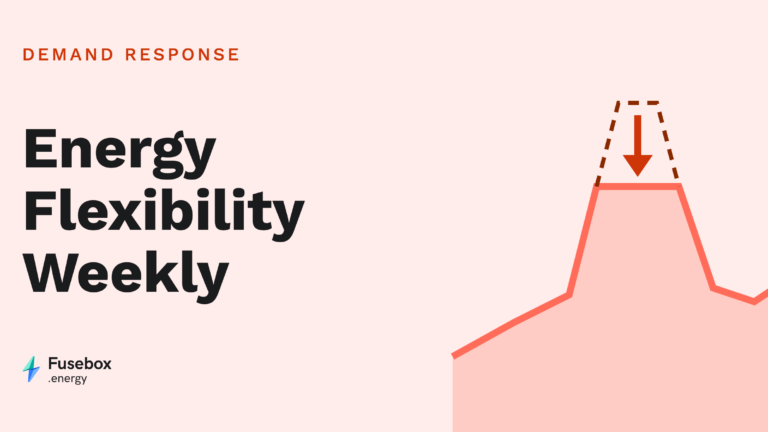
Specifically, Fusebox operates in the balancing market through electricity demand response. Production and consumption in the electricity system need to stay in balance, but unexpected fluctuations happen, and the system operator has to increase production or reduce consumption to compensate.
Fusebox helps improve that response by drawing on many consumers at once. Each connected consumer sees a very small, often unnoticeable reduction in consumption; combined across many sites, that adds up to real capacity — enough to participate meaningfully in the market. It all happens automatically, safely, and within conditions the consumer sets in advance.
The more consumers connected to the platform, the less need there is for expensive diesel or gas peaker plants to step in instead.
2. The global green transition
The addition of renewable energy makes the electricity market more volatile, so the importance of demand response keeps growing.
The green transition cuts across every sector and touches a huge number of people directly, which makes it easier to reach new markets. New competitors are inevitable, but that competition pushes the whole field to move faster and smarter.
3. Smarter equipment and automation
Better technology makes it easier to connect to the platform. Smart buildings and devices are increasingly common and easy to control remotely — equipment like electric pumps, cooling, and ventilation systems with some thermal inertia is especially well suited. Many commercial buildings in Estonia, including shopping malls and cold stores, were already connected to the Fusebox platform even at this early stage. Systems like these generate revenue for their owners by cutting both energy costs and carbon dioxide (CO2) emissions.
4. Rising electricity prices
The sharp rise in electricity prices has made this field far more urgent, pushing customers and partners to actively address the higher costs it creates.
What this adds up to
The green transition remains one of the most important issues globally. A more open energy market gives consumers a way to get involved, support the stability of the electricity system, and cut CO2 emissions, while earning extra income in return. With the right smart devices in place, all of this happens automatically, safely, and within the conditions you set.
See what demand response looks like on the Fusebox platform today. Explore the solution →